
It’s a question we hear all the time. It usually comes up once homeowners start thinking seriously about space, future plans, and whether improving the home they’re already in makes more sense than moving.
In Essex, that question comes up a lot. Space isn’t endless, moving costs are eye-watering, and plenty of homes sit on decent plots without much room to build outwards. In this article, we’ll talk honestly about how much value a loft conversion can add in Essex, when it’s a sensible move, and when it might not. No sales pitch — just what we see from working on local homes, week in, week out.
How much value does a loft conversion add in Essex, really?

Short answer: often a lot — but not always in the same way for every property.
In our experience, a well-designed loft conversion in Essex can add somewhere in the region of 15% to 25% to a home’s value. Sometimes more. Sometimes less. It depends on the house, the street, and what the conversion actually gives you.
A three-bed semi in places like Chelmsford, Rayleigh or Brentwood that becomes a four-bed with an extra bathroom usually sees a noticeable jump. Estate agents like simple maths. More bedrooms, more usable space, broader buyer appeal. We see this especially where families are trying to stay in a good school catchment rather than move.
One thing homeowners don’t always realise is that valuers look less at the “loft” part and more at how the house now functions. If it feels like a natural extra floor, value tends to follow.
Why loft conversions often work well for Essex homes
Essex has a huge mix of housing. Victorian terraces near town centres, 1930s semis, post-war homes, and plenty of newer estates. Many of these were built with lofts that are surprisingly generous.
We see this a lot in older semis around Leigh-on-Sea and Southend, where the roof pitch is steeper than people expect. With the right design, you can get a proper bedroom and bathroom without the space feeling squeezed.
Compared to extensions, loft conversions often come with fewer planning hurdles, less disruption to gardens, and better cost-to-space ratios. That combination is a big reason they’re so popular locally.
The type of loft conversion makes a big difference
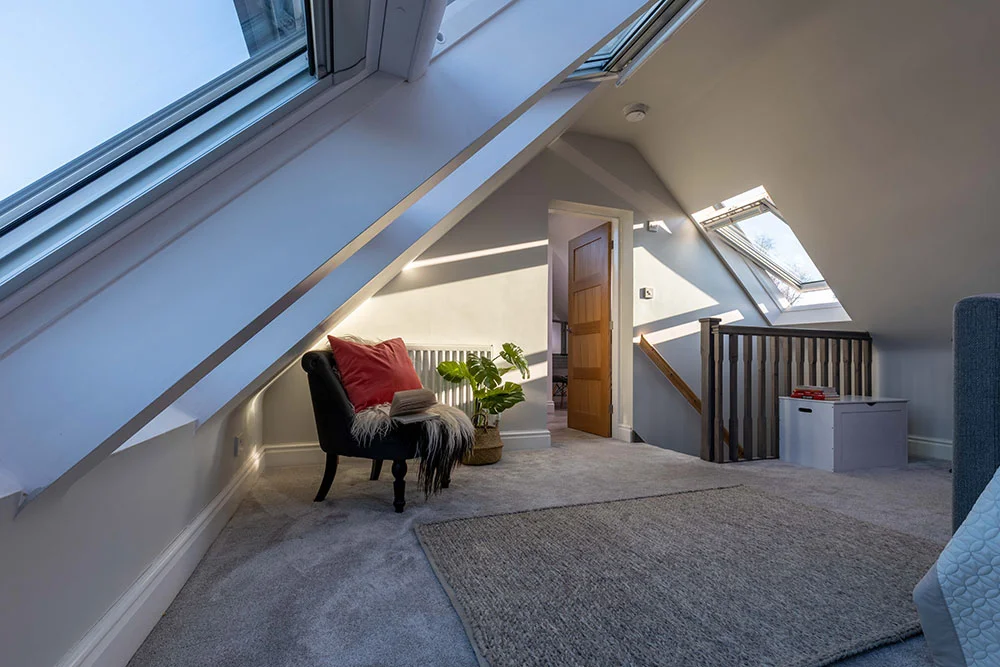
Not all loft conversions add value in the same way.
A basic Velux conversion — roof windows, one bedroom, no structural roof change — can still add value, but it’s usually more modest. These work well for home offices or guest rooms, especially in smaller properties.
Dormer conversions tend to be the sweet spot for value. They create proper head height and usable floor space, which buyers notice straight away. In areas with rows of similar houses, once one or two have dormers, they almost become expected.
Mansard conversions are less common in Essex but can add significant value in the right locations. They’re more expensive, but on higher-value properties the uplift can justify it.
Cost versus value: where people get caught out
A common mistake is assuming the most expensive conversion will automatically add the most value. It doesn’t always work like that.
If your street is mostly three-bedroom homes and you turn yours into a luxury five-bed with high-end finishes, the ceiling price of the area still matters. Buyers won’t always pay beyond what the location supports.
From jobs we’ve carried out locally, the best returns usually come from creating the “next logical step” for that type of house. Turning a two-bed into a three-bed. A three into a four. Not trying to turn a family semi into a mini-mansion.
Loft conversion vs extension: which adds more value?
We’re asked this a lot, and the honest answer is: it depends on the plot and the street.
Extensions can add significant value, but they often cost more per square metre and eat into garden space. In parts of Essex where outdoor space is a big selling point, that can actually work against you.
Loft conversions use space that’s already there. Less groundwork, fewer weather delays (important in Essex winters), and usually a quicker build. For value added versus cost, lofts often come out ahead.
Does council tax increase after a loft conversion?
This comes up regularly, usually towards the end of a conversation.
In most cases, council tax doesn’t increase immediately after a loft conversion. The band is typically reassessed when the property is sold, not when the work is completed. That said, if the conversion significantly increases the home’s value, it could move into a higher band when reassessed in future.
It’s not something we see cause problems day to day, but it’s worth being aware of.
Are there downsides to loft conversions?
There can be, yes.
Stairs take up space. Sometimes more than people expect. Poorly designed layouts can make existing rooms feel smaller. And if head height is tight, you can end up with awkward spaces that don’t feel like “proper” rooms.
We also see homes where storage gets lost without a clear plan to replace it. That matters to families, especially in smaller houses.
These issues don’t mean a loft conversion isn’t worth doing. They just mean it needs to be thought through properly.
Planning rules and the “four year rule”
Most loft conversions in Essex fall under permitted development, provided they meet certain criteria. That keeps things simpler.
The four year rule sometimes gets mentioned in conversations, usually when someone’s heard a half-story online. In simple terms, if a development has been completed and not challenged for four years, it can become lawful. But relying on that is risky and not something we’d ever recommend planning around.
Doing things properly from the start avoids headaches later, especially if you sell.
What adds the most value overall?
A loft conversion adds value because it creates useful space, not just square footage.
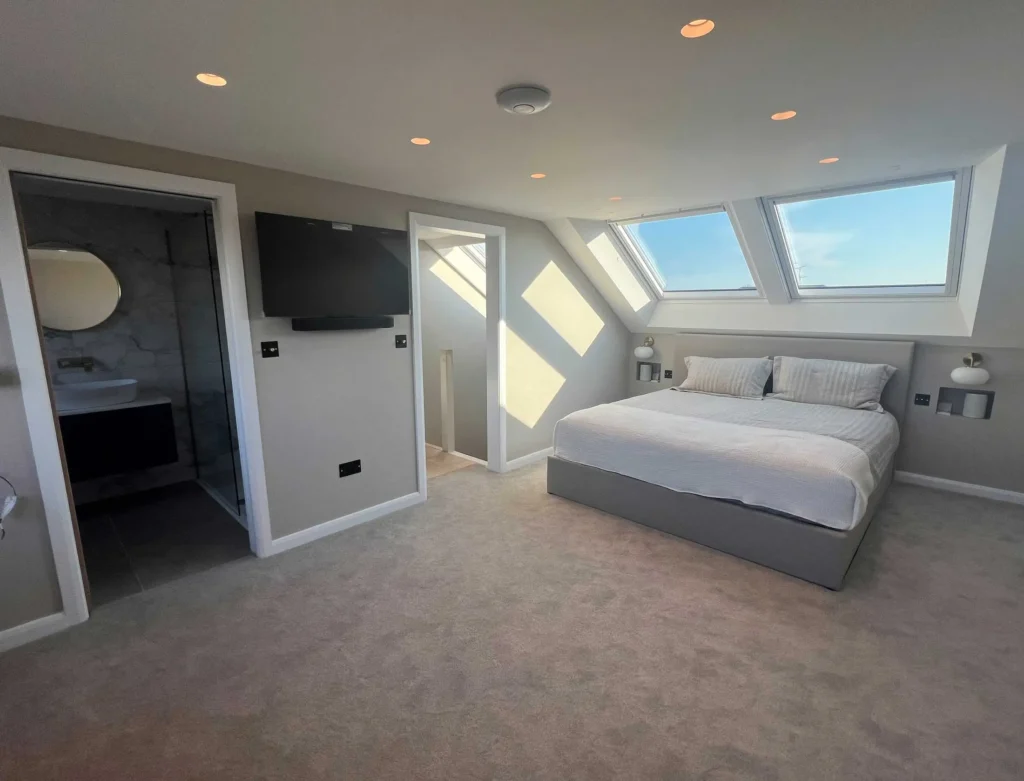
An extra bedroom with an en-suite is often the biggest win. Home offices are popular too, especially since more people work from home now, but bedrooms still drive resale value in most cases.
Good natural light, sensible stairs, and a layout that feels like part of the house matter more than fancy finishes.
So, is a loft conversion worth it in Essex?
In many cases, yes. Especially if you’re already happy where you live and just need more room.
We see this a lot with families who like their neighbours, their local schools, and the area — but have simply outgrown the house. A loft conversion lets them stay put while improving the value at the same time.
That said, it’s not one-size-fits-all. The roof, the layout, the street, and your long-term plans all play a part.
A final word from us
If you’re asking whether a loft conversion adds value, you’re already thinking in the right way. It’s not just about building more space — it’s about making the house work better and protecting your investment.
If you’d like an honest opinion based on your specific property, feel free to get in touch with Timber Construction Ltd. We’re happy to talk things through, look at what’s realistic, and give you a clear idea of what would (and wouldn’t) make sense for your home in Essex. No pressure. Just straightforward advice.